
The world of competitive gaming has transformed from a niche pastime into a global phenomenon. Esports, or electronic sports, has established itself as a billion-dollar industry, drawing millions of viewers, lucrative sponsorships, and professional players who train as rigorously as traditional athletes. But how did we get here? Who are the key players shaping the industry? And what does the future hold for esports? Let’s take a deep dive into this exciting digital arena.
A Brief History of Esports
While video games have been around since the 1970s, competitive gaming didn’t take off as an organized industry until the late 1990s and early 2000s. Here are some key milestones that shaped the esports world:
- 1972 – The First Known Video Game Tournament
- Stanford University hosted a competition for Spacewar!, marking one of the earliest recorded gaming contests.
- 1980 – The Atari National Space Invaders Championship
- Over 10,000 players participated in what became one of the first major gaming tournaments.
- 1990s – The Rise of LAN Parties and Early Pro Gaming
- Multiplayer games like Doom and Quake spurred competitive gaming through local area network (LAN) tournaments.
- South Korea embraced StarCraft competitions, laying the foundation for modern esports.
- 2000s – Online Play and Streaming Revolution
- Games like Counter-Strike and Warcraft III led to international leagues.
- Twitch’s launch in 2011 brought esports competitions to a massive online audience.
- 2010s – Esports Goes Mainstream
- League of Legends and Dota 2 attracted millions of players and record-breaking prize pools.
- Esports organizations secured major sponsorships from brands like Red Bull and Intel.
- 2020s – The Billion-Dollar Boom
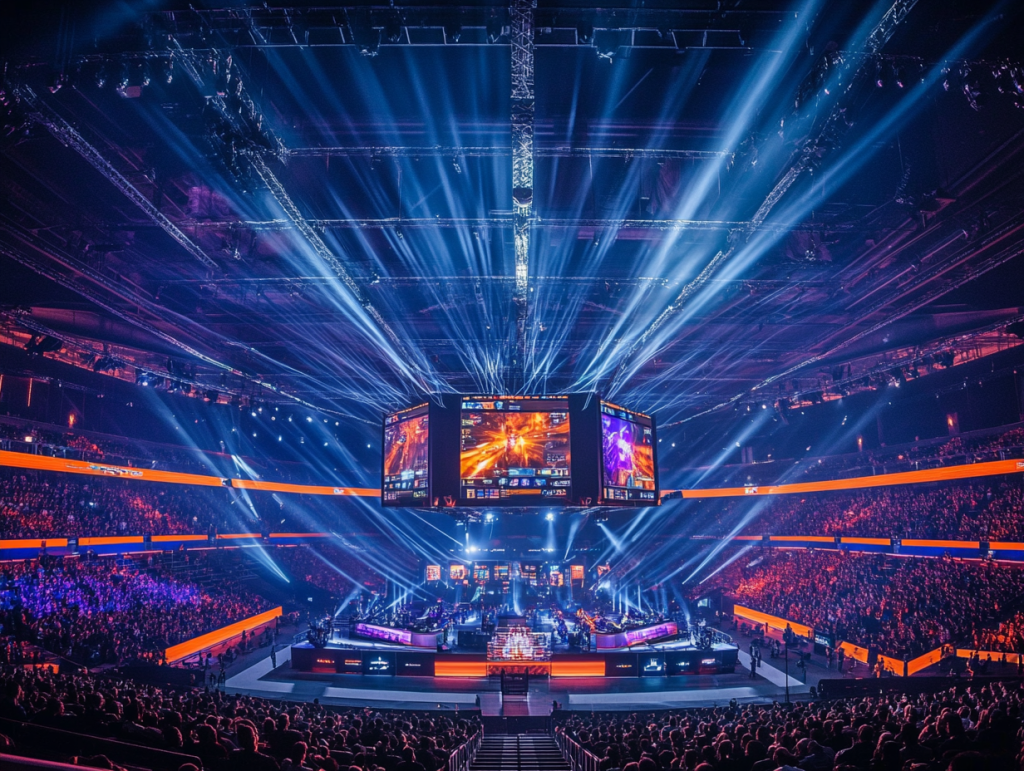
- Esports tournaments rival traditional sports in viewership, with events like The International and Fortnite World Cup drawing millions.
- Universities and high schools introduce esports scholarships and programs.
Key Players in the Esports Industry
Esports isn’t just about the players—it’s an ecosystem of developers, teams, sponsors, and broadcasting platforms. Here are the biggest influencers in the industry:
1. Game Developers and Publishers
- Companies like Riot Games (League of Legends), Valve (Dota 2, Counter-Strike), and Activision Blizzard (Overwatch, Call of Duty) create and manage competitive gaming ecosystems.
- They design the esports framework, set tournament rules, and fund major prize pools.
2. Professional Teams and Organizations
- Organizations like Team Liquid, T1, Cloud9, and FaZe Clan recruit top players and compete globally.
- Many esports teams function like traditional sports teams, with training facilities, coaches, and player salaries.
3. Streaming Platforms and Media Companies
- Twitch, YouTube Gaming, and Facebook Gaming dominate esports broadcasting, streaming live matches and behind-the-scenes content.
- Traditional sports networks like ESPN and BBC have also started covering esports events.
4. Sponsors and Advertisers
- Brands like Coca-Cola, Nike, Intel, and Red Bull see esports as a valuable marketing opportunity, funding teams and tournaments.
- Sponsorships fuel prize pools, player salaries, and event production.
5. Fans and Community
- Millions of passionate fans engage through forums, social media, and live events.
- Community-driven platforms like Reddit, Discord, and Twitter play a major role in shaping esports culture.
The Cultural Impact of Esports
Esports is more than just competition—it’s a cultural movement influencing entertainment, education, and even business.
1. Esports as a Legitimate Sport
- Countries like South Korea and China recognize esports players as professional athletes.
- The International Olympic Committee has explored including esports in the Olympics.
2. The Rise of Esports Education
- Universities like the University of California, Irvine, and Becker College offer esports scholarships and degrees in game management.
- High schools introduce esports clubs, teaching teamwork and strategy.
3. Esports and Mainstream Media
- Hollywood has taken notice, with esports-inspired films and TV shows gaining popularity.
- Netflix’s High Score and Free Guy highlight gaming culture’s mainstream appeal.
4. Career Opportunities Beyond Gaming
- Esports isn’t just about playing—career paths include shoutcasting (esports commentary), event production, team management, and marketing.
- Companies hire esports professionals for business development, analytics, and sponsorship management.
Challenges and the Future of Esports
Despite its rapid growth, esports faces several hurdles:
1. Sustainability of the Industry
- Some organizations struggle with profitability due to high player salaries and tournament costs.
- Developers control esports ecosystems, sometimes leading to unstable competitive environments.
2. Mental and Physical Health
- Pro gamers face burnout, repetitive strain injuries, and mental health pressures.
- Teams and organizations are prioritizing player well-being with fitness programs and psychologists.
3. Regulation and Fair Play
- Issues like cheating, match-fixing, and doping (using performance-enhancing drugs) pose ethical concerns.
- Governing bodies like the Esports Integrity Commission (ESIC) aim to standardize rules and prevent misconduct.
4. Future Growth and Innovation
- Virtual reality (VR) and augmented reality (AR) could introduce new competitive formats.
- Blockchain and NFTs are being explored for digital ownership of in-game assets.
- Esports betting and fantasy leagues may change how audiences interact with competitions.
Conclusion
Esports is no longer just a subculture—it’s an international industry reshaping entertainment, business, and sports. With dedicated players, massive investments, and mainstream recognition, its future is brighter than ever. Whether you’re a casual gamer, an aspiring pro, or just an intrigued observer, there’s never been a better time to explore the esports revolution.
Who knows? Maybe one day, we’ll see esports standing shoulder to shoulder with the World Cup or the Super Bowl in global significance. Until then, let’s grab our keyboards, controllers, and headsets—because the game is just getting started.
— Anca Inari


 Neon Aurora
Leave a comment