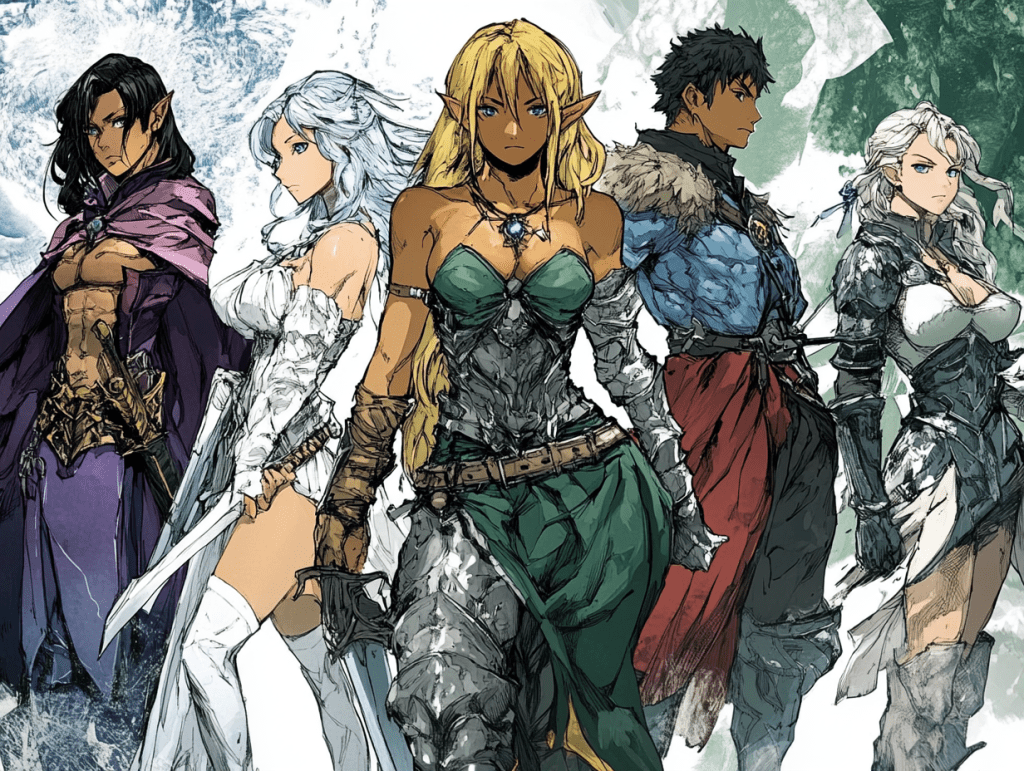
The role-playing game (RPG) genre has come a long way since its inception. What started as text-based adventures on early computers has evolved into vast, immersive worlds filled with complex stories, unforgettable characters, and thrilling gameplay. As someone who’s just beginning to explore the exciting realm of gaming journalism, I couldn’t resist diving into the fascinating journey of RPGs. So, grab your virtual sword and join me as we explore how this beloved genre has grown and captivated players worldwide!
The Birth of RPGs: Text-Based Adventures (1970s-1980s)
The earliest RPGs drew inspiration from tabletop games like Dungeons & Dragons (D&D). These games translated the collaborative storytelling and dice-rolling mechanics into a digital format. Text-based adventures, such as Colossal Cave Adventure (1976) and Zork (1980), allowed players to embark on quests using only text commands. Players would type commands like “go north” or “pick up sword” to progress through the game.
Key Mechanics Introduced:
- Player Choice: Decisions influenced outcomes, laying the groundwork for nonlinear storytelling.
- Inventory Management: Collecting and using items to solve puzzles became a staple.
- World Exploration: Even without graphics, these games provided a sense of discovery and adventure.
While limited by technology, these games offered endless possibilities for the imagination and set the stage for graphical RPGs.
The Rise of Graphical RPGs (1980s-1990s)
As technology improved, RPGs transitioned from text to graphics. Early graphical RPGs like Ultima (1981) and Wizardry (1981) introduced players to visually represented worlds. These games expanded upon the mechanics of text adventures by offering tile-based maps and turn-based combat systems.
Key Mechanics Introduced:
- Top-Down Perspectives: Players could view and navigate the game world visually.
- Turn-Based Combat: Battles became strategic, with players planning moves against enemies.
- Character Progression: Leveling up characters and improving stats added depth to gameplay.
The late 1980s and early 1990s saw Japanese developers innovate the genre further. Games like Final Fantasy (1987) and Dragon Quest (1986) brought more accessible stories, iconic characters, and emotional narratives to the forefront. These titles helped popularize RPGs globally, introducing features like party systems and memorable soundtracks.
The Golden Era of RPGs (1990s-2000s)
The 1990s are often regarded as a golden age for RPGs. Advances in hardware capabilities allowed developers to craft expansive worlds and cinematic experiences. The release of Final Fantasy VII (1997) on the Sony PlayStation was a landmark moment, proving that RPGs could deliver blockbuster-level storytelling.
Key Mechanics Introduced:
- Cinematic Storytelling: Cutscenes and pre-rendered graphics created emotional connections.
- Active Time Battle Systems: Introduced by Final Fantasy IV (1991), this mechanic added real-time elements to turn-based combat.
- Rich World-Building: Games like Chrono Trigger (1995) featured multiple endings, time travel mechanics, and branching narratives.
Meanwhile, Western RPGs flourished with titles like Baldur’s Gate (1998) and Diablo (1996). These games brought deep customization, real-time combat, and multiplayer modes to the forefront.
Notable Titles:
- Baldur’s Gate: Known for its complex storytelling and use of the D&D ruleset.
- The Elder Scrolls: Morrowind (2002): Introduced open-world exploration on a massive scale.
- Diablo: Popularized the “action RPG” subgenre with its fast-paced combat and loot systems.
The Rise of MMORPGs (2000s)
The early 2000s saw the emergence of Massively Multiplayer Online Role-Playing Games (MMORPGs). Titles like EverQuest (1999) and World of Warcraft (2004) allowed players to explore vast worlds and interact with thousands of others in real time.
Key Mechanics Introduced:
- Persistent Worlds: Game worlds continued to evolve even when players were offline.
- Social Interaction: Guilds, raids, and player-driven economies fostered community building.
- Endless Content: Regular updates and expansions kept players engaged for years.
World of Warcraft became a cultural phenomenon, attracting millions of players and showcasing the social potential of RPGs.
Modern Action RPGs (2010s-Present)
Modern RPGs have blended traditional elements with action-packed gameplay, creating immersive and cinematic experiences. Games like The Witcher 3: Wild Hunt (2015) and Baldur’s Gate III (2023) showcase the pinnacle of storytelling, graphics, and player freedom.
Key Mechanics Introduced:
- Dynamic Choices: Player decisions have far-reaching consequences, altering the game world and story.
- Seamless Combat: Real-time combat mechanics make battles fluid and engaging.
- Advanced AI: NPCs react dynamically to player actions, adding realism.
The resurgence of isometric RPGs like Pillars of Eternity (2015) and the success of modern action RPGs demonstrate the genre’s enduring appeal.
How RPG Mechanics Shaped Gaming
Role-playing games have contributed numerous mechanics that have influenced the broader gaming industry:
- Character Customization: RPG-inspired systems are now found in shooters (Mass Effect) and action games (Assassin’s Creed).
- Story-Driven Gameplay: RPG storytelling techniques are used in games like The Last of Us and Horizon Zero Dawn.
- Open-World Exploration: Titles like Breath of the Wild owe much to RPG world-building.
Looking Ahead
The RPG genre’s evolution is a testament to the creativity and passion of developers and players alike. From the simplicity of text-based adventures to the sprawling, choice-driven worlds of today, RPGs have pushed the boundaries of what games can achieve. They remind us that at the heart of gaming lies a desire to tell and experience unforgettable stories.
As someone just starting out in the world of gaming journalism, I’m thrilled to share my love for this genre and its incredible history. What’s your favorite RPG moment? Let’s celebrate this journey together in the comments below! 🎮✨
Thank You for Joining Me on This Epic RPG Adventure!
Wrapping up this deep dive into the evolution of RPGs feels like I’ve leveled up as a writer. When I started my blogging journey, I focused on summarizing stories to find my footing, and it’s been a thrilling ride so far. Writing about RPGs has shown me how much there is to explore in gaming — not just the past, but the exciting possibilities ahead.
As I continue to grow, I’m eager to branch out and try new angles, whether that’s diving into indie games, tech innovations, or even the art of game design. But you, my wonderful readers, are my party members on this quest, and I’d love to hear from you! What gaming or tech topic would you like me to tackle next?
Drop your ideas in the comments — your input will help shape the next chapter of this blog. Let’s keep exploring, discovering, and celebrating gaming together! 🎮✨
Until next time, keep dreaming, keep adventuring, and always stay curious.
With excitement for the future,
Anca Inari
Reflecting on gaming’s future, one post at a time. 💖



 Neon Aurora
Leave a comment